


From a sermon by Bryant Wright, Founder, RFTH
Jesus said to them, “If God were your Father, you would love me, for I have come here from God. I have not come on my own; God sent me. Why is my language not clear to you? Because you are unable to hear what I say.”
John 8:42-43
In John 8, Jesus challenges not only the religious identity but also the spiritual integrity of His listeners.
They claimed Abraham as their father, yet their intentions and actions towards Jesus revealed a profound disconnection from the faith Abraham exemplified. This disconnection prompts Jesus to expose a critical truth: identifying with a religious tradition is very different from actually living out that faith.
What are the real implications of Jesus’ challenge in our lives? Do we merely claim to follow Christ, or do our lives manifest the faith and obedience characteristic of Abraham, whom we regard as the father of faith? Jesus’ confrontation reveals that the true children of Abraham are those who do Abraham’s works, which are marked by righteousness, faith, and a profound commitment to God’s directives.
Moreover, Jesus’ words, “If God were your Father, you would love me” (John 8:42), serve as a stark reminder and a litmus test for our faith today. This statement forces us to examine the authenticity of our devotion. Is our love for God reflected in our acceptance of and obedience to Christ? Embracing Jesus as the ultimate truth means our faith is not just nominal but active and transformative, shaping every aspect of our lives and aligning us with the divine truth that liberates and sanctifies.
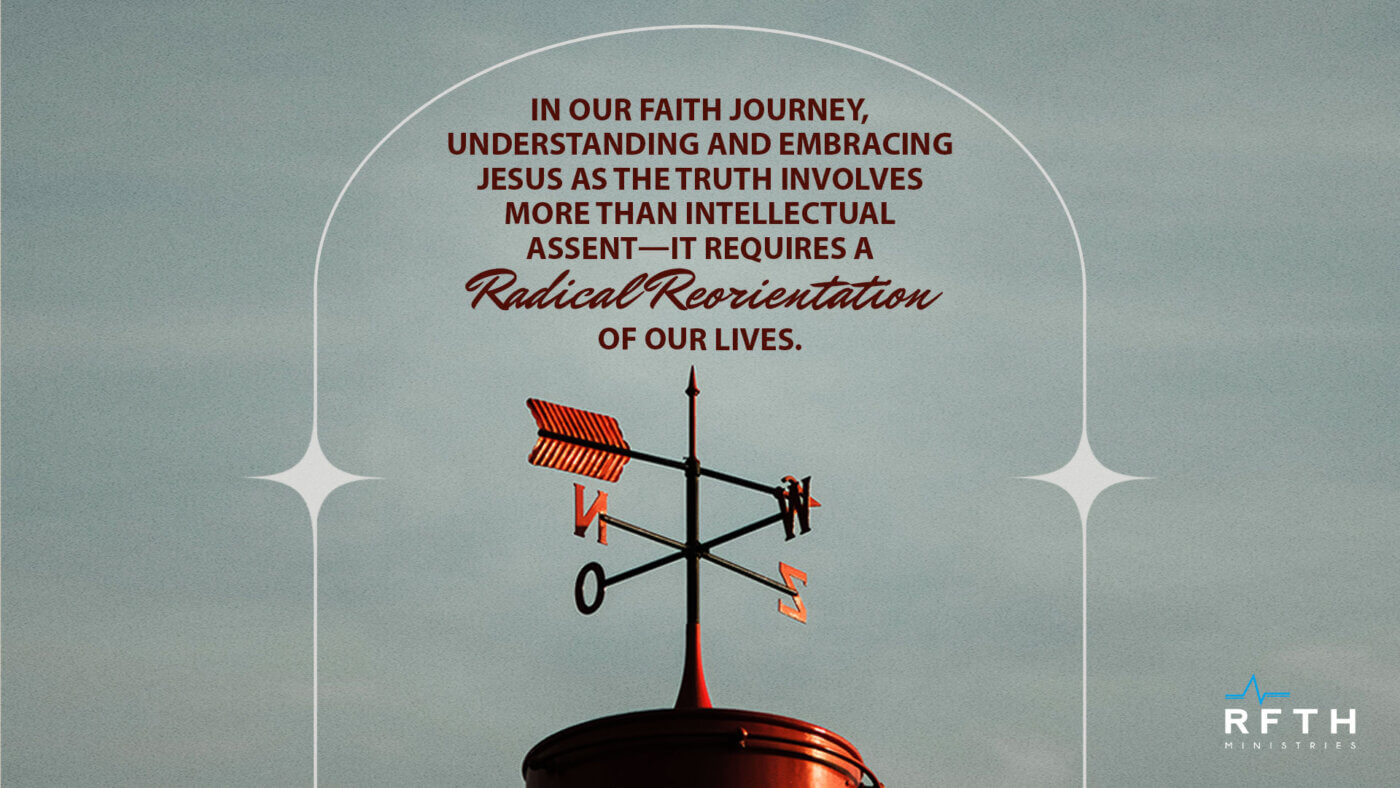
In our faith journey, understanding and embracing Jesus as the truth involves more than intellectual assent—it requires a radical reorientation of our lives. It means letting His truth penetrate and transform the deepest, most profound aspects of our being and empowering us to live out the true freedom He offers.
DIG DEEPER
Read “Who Was Abraham in the Bible?” at GotQuestions.org


