


Jonathan Munson, Executive Director, RFTH
“But I trust in Your unfailing love…”
Psalm 13:5
If you’ve walked with the Lord for any length of time, you’ve probably experienced a crisis of belief.
What’s a crisis of belief?
It’s a season when the Lord doesn’t act according to what we believe to be true about Him.
For example:
• We believe in the nearness of God, but right now, He seems far away.
• We believe that God speaks, but right now, His silence is deafening.
• We believe that God is a mighty Deliverer, but right now, He isn’t delivering us out of our situation.
A crisis of belief is incredibly perplexing and rattles our faith to its core. Bewildered by what we’re experiencing, we silently ask God a litany of questions:
• Where are You?
• Why won’t You reveal Yourself?
• How long will You allow this to go on?
To make matters worse, it feels like we’re all alone. No one could possibly understand what we’re going through (we falsely conclude). So, we keep things hidden, maintaining the façade that everything is okay. Deep down, however, our faith is hanging on by the tiniest of threads.
And with such a nagging discrepancy between our private interior and our public exterior, we wonder how much longer we can hold on. We’re thinking of giving up, abandoning faith altogether.
If this is how you feel, please hear me clearly: You will get through this!
I’ve survived my crises of belief, and you will, too. What you’re experiencing is a normal part of a life of faith.
Author Philip Yancey expounds on the ebb and flow of our faith journey, “We may experience times of unusual closeness when prayers are answered in an obvious way, and God seems intimate and caring. We may also experience dark times when God stays silent, nothing works according to formula, and all the Bible’s promises seem glaringly false.”
But don’t take Mr. Yancey’s word for it.
Ask David.
In Psalm 13, David is smack dab in the middle of a crisis of belief. His resounding question is, “How long, O Lord?” Like desperate shots from a rescue flare gun, David raises this question four times in the first two verses, revealing his frustration at God’s timing (Psalm 13:1,2).
David is sick and tired of waiting for God to show up. He’s begging for an “answer” and fears that his enemies will rejoice when he “falls” (Psalm 13:3,4).
But, just when we think David is about to call it quits, the entire trajectory of the psalm turns.
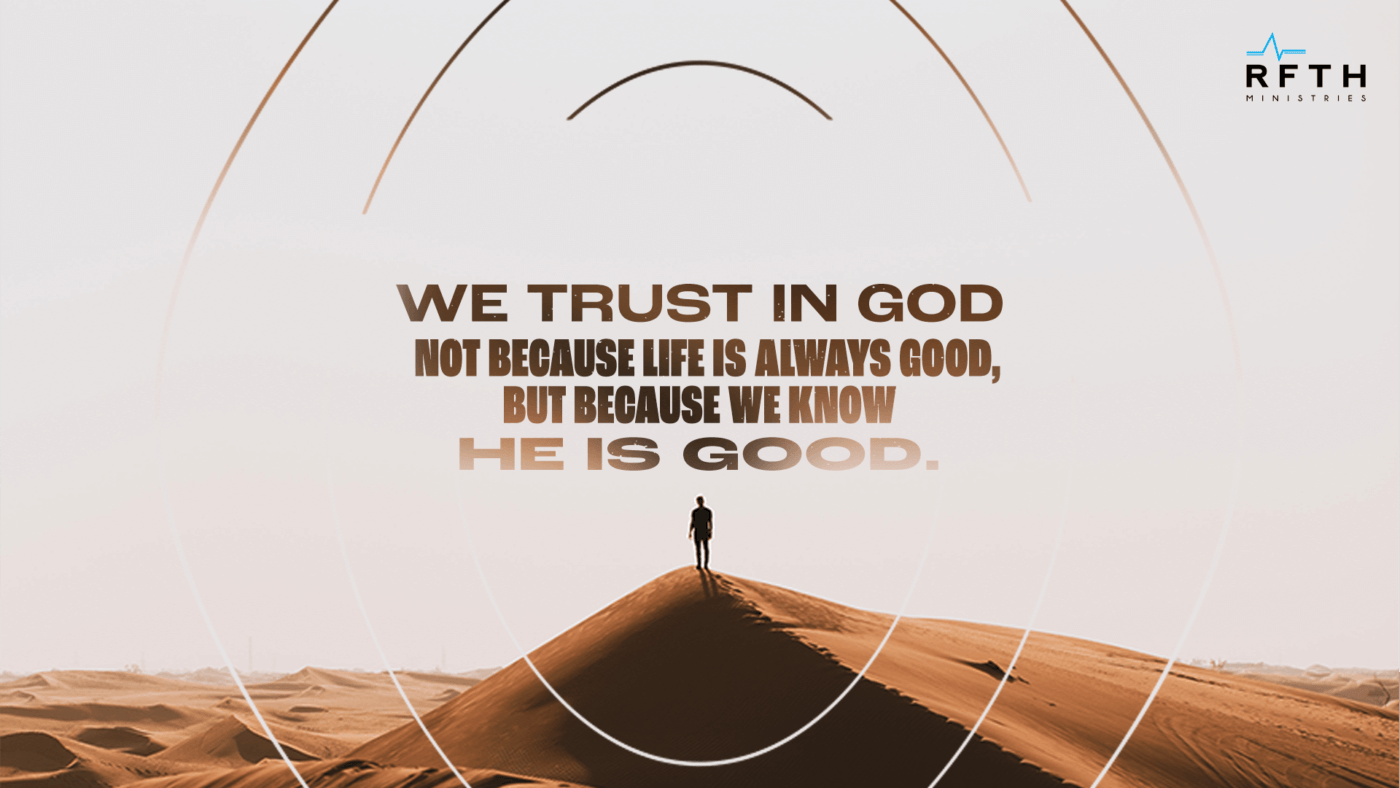
Even though he has reasons to the contrary, David makes a fundamental choice: He resolves to keep trusting in the Lord’s “unfailing love”(Psalm 13:5). You see, trust is not centered around our feelings or our particular circumstances. Trust is anchored in the character of God. And even during a crisis of belief, we must continue to trust in who God is and in what we know is true of Him. Ultimately, we trust in God not because life is always good but because we know He is good. The Bible, as well as our own experiences, affirms His goodness.
Although David isn’t experiencing much goodness in his present, he recalls God’s goodness in his past, which causes his heart to overflow in worship.
“I will sing to the Lord, for He has been good to me.”
(Psalm 13:6)
So, how about you? Will you choose to continue to trust despite how you feel? Will you follow David’s example and survive your crisis of belief?
Don’t give up.
You will get through this!
DIG DEEPER
Read “How Can I Overcome a Crises of Faith?” at GotQuestions.org
FOLLOW US ON SOCIAL MEDIA


